Table of contents
XR Learning Workshops
Workshop in Tallin (10-12 June 2024)
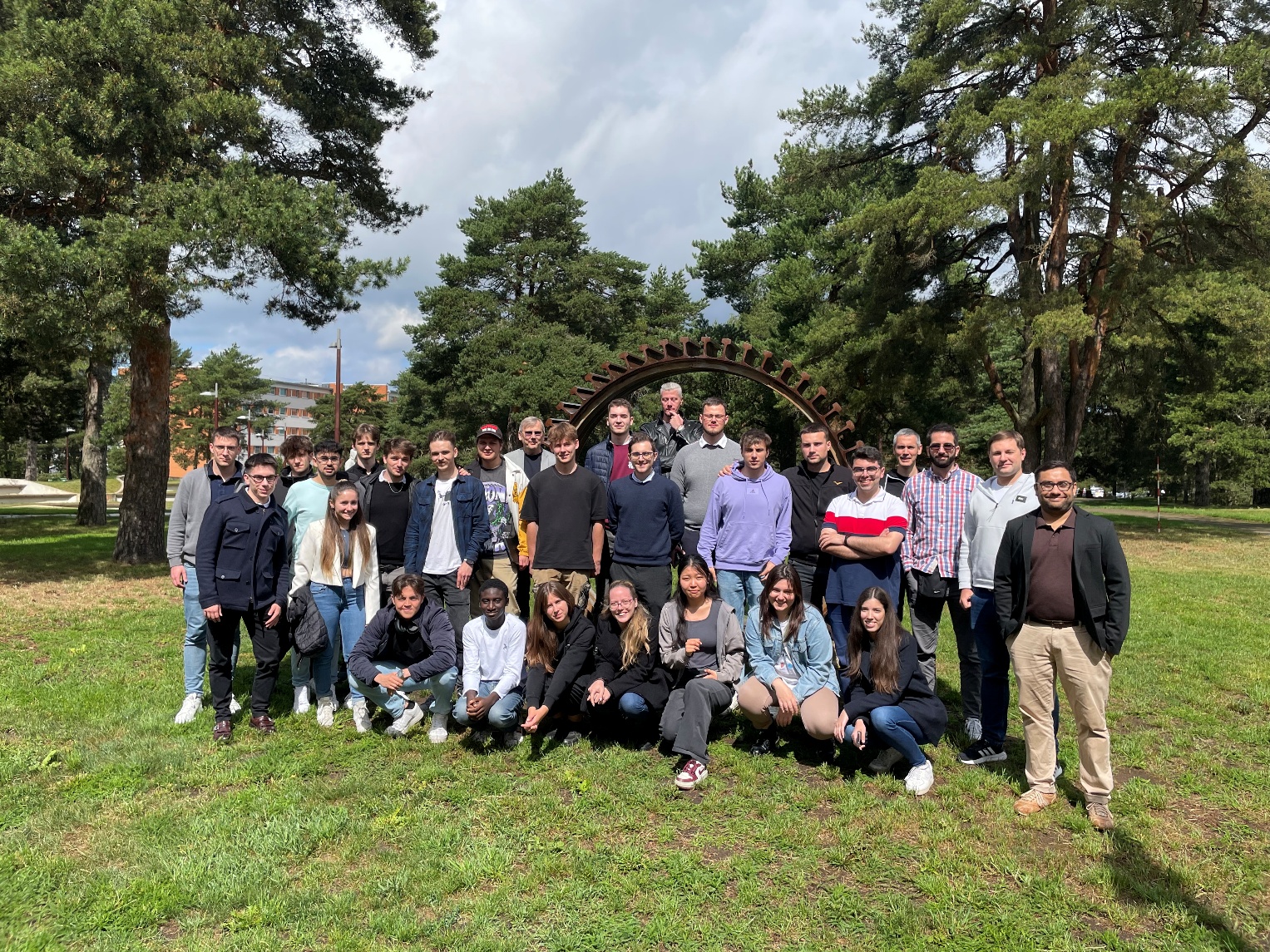
The first XR Learning Workshop of the XREN project was held at Tallinn University of Technology (TalTech) in Tallinn, Estonia, from 10 to 12 June 2024. The event marked an important milestone in our journey towards advancing technology-enhanced engineering education within the framework of the Erasmus+ project Extended Reality Tools to Support Learning Activities in Engineering (XREN). The workshop brought together students and tutors from XREN consortium partners, including TalTech, Politecnico di Milano (Polimi), the University of Belgrade, and CNR-STIIMA. The workshop provided a collaborative and engaging environment in which participants could exchange knowledge, explore XR-supported learning approaches, and work together on innovative learning activities.
Activities
The workshop activities were organised into the following modules.
-
Introduction and team building
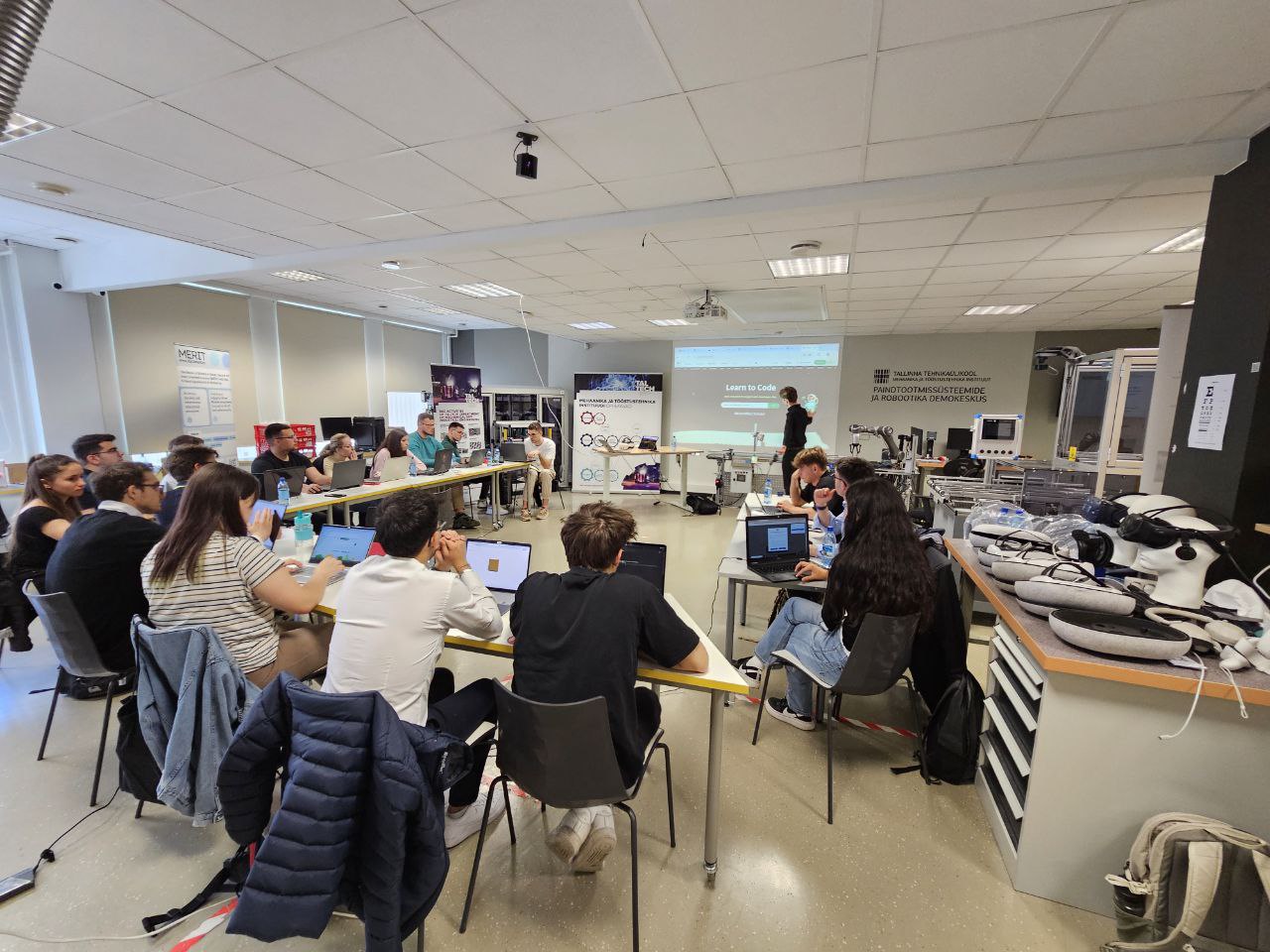
The workshop began with an introduction to the XR Learning Workshop and an overview of the Joint Lab task, “Development of an AR Platform for Robot Interaction and Path Planning.” Participants were introduced to the objectives, expected outcomes, and working approach, followed by team-building activities.
-
XR tools and software setup
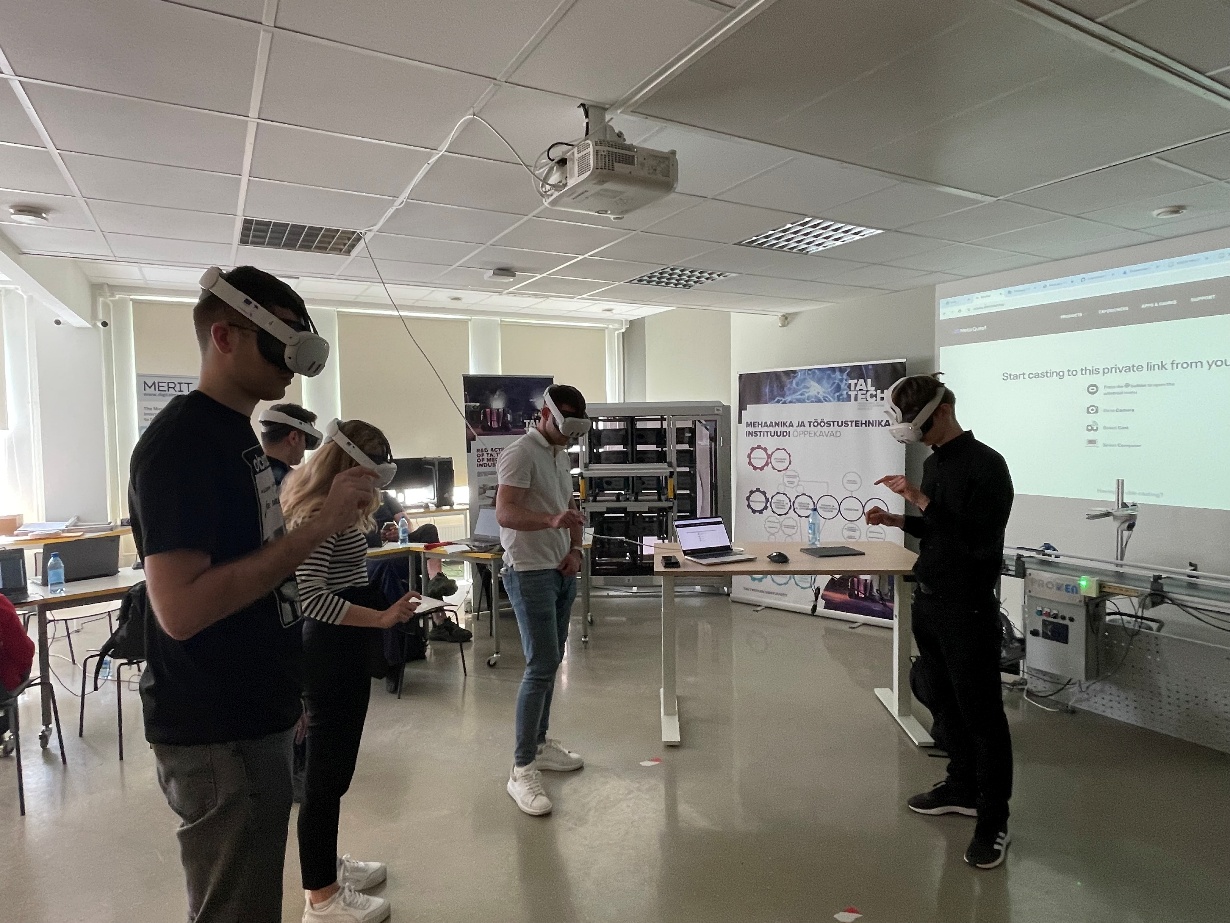
Students gained practical experience with XR-related tools and the required software environment. The activities covered user interface interaction in VR, design guidelines, and the possibilities offered by immersive technologies. The technological stack for the WebXR environment included Next.js, API calls, Hooks, and Three.js.
-
Robot connectivity and AR platform development
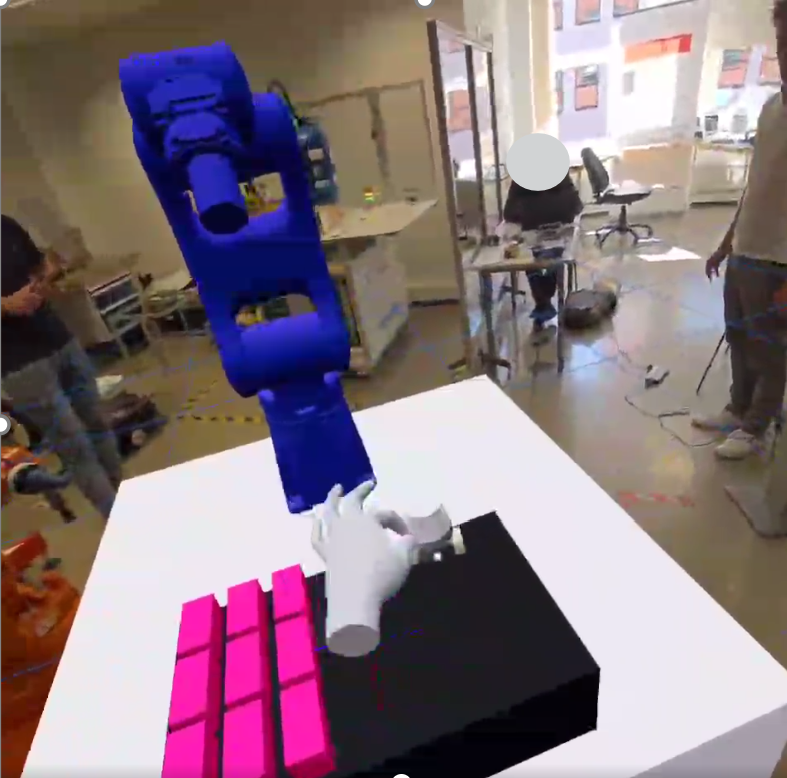
Students tested robot connectivity and communication using the selected XR tools and software. Throughout the Joint Lab activities conducted in the TalTech IVAR Lab, students worked in teams to develop an AR platform using the Meta Quest 3 headset. The developed platform enables users to monitor the current state of the Yaskawa Motoman GP8 robot, directly control its operation, and create robot path plans, thereby supporting spatial understanding and enhancing the overall user experience.
-
Teamwork and practical demonstration
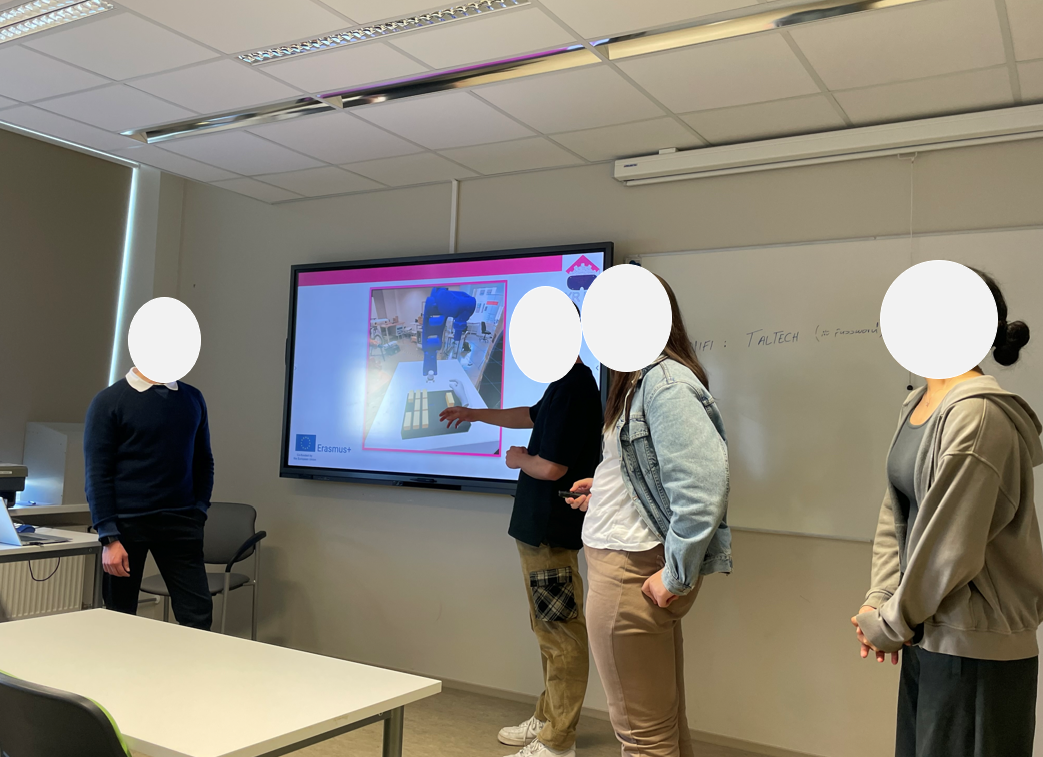
Each team successfully developed and executed a robot recipe for constructing structures from wooden blocks, simulating a pick-and-place process. At the end of the activity, the teams presented their solutions, individual and collective contributions, and key learning experiences.
-
Parallel learning activity – pneumatic system assembly
As a parallel activity, students tested and experienced an AR-supported learning environment for the assembly and operation of pneumatic systems. They completed a pneumatic circuit assembly task as a hands-on learning exercise and experienced two different learning modes: first, assembling the circuit in the physical laboratory using a traditional paper-based guide; and second, performing the learning activity with support from an immersive AR-based environment. This provided students with practical experience of both conventional and XR-supported approaches to engineering learning.
Assessment
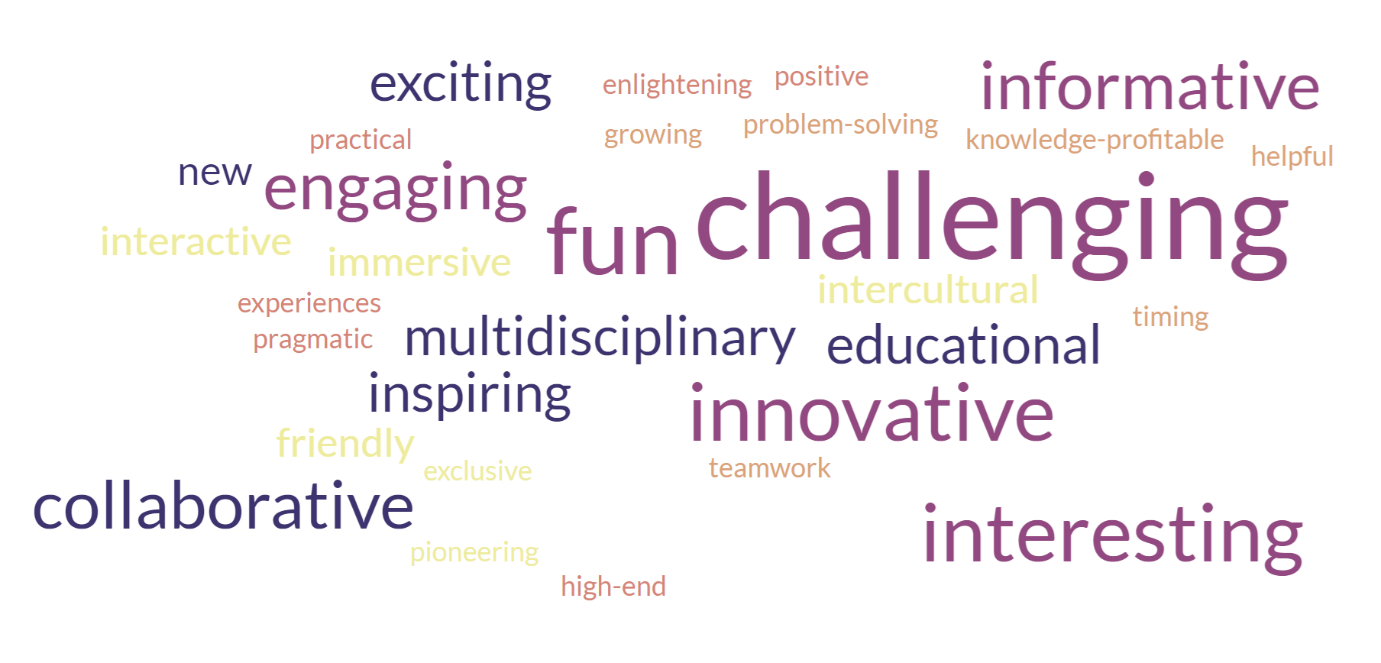
A total of 20 students responded to questions regarding their expectations for the workshop in Tallinn. The responses were collected through a questionnaire consisting of open-ended questions. As part of the expectations survey, students were asked to provide “five adjectives that you associate with the workshop experience.” The adjectives reported by the students, reflecting their anticipated perceptions and expectations of the workshop, are illustrated in the figure below.
Students’ engagement during the workshop was also assessed through a questionnaire comprising seven items, each rated on a five-point Likert scale (1–5). The results provide insights into the students’ level of engagement throughout the workshop and are presented in the graph below.
The results indicate that participants feel highly committed, successful, and motivated, but their alertness, confidence, performance, and control are moderate to low. This suggests that while they are driven and feel successful, there might be areas to improve regarding their confidence and perceived control over tasks [1].
Workshop in Milan (19-21 May 2025)
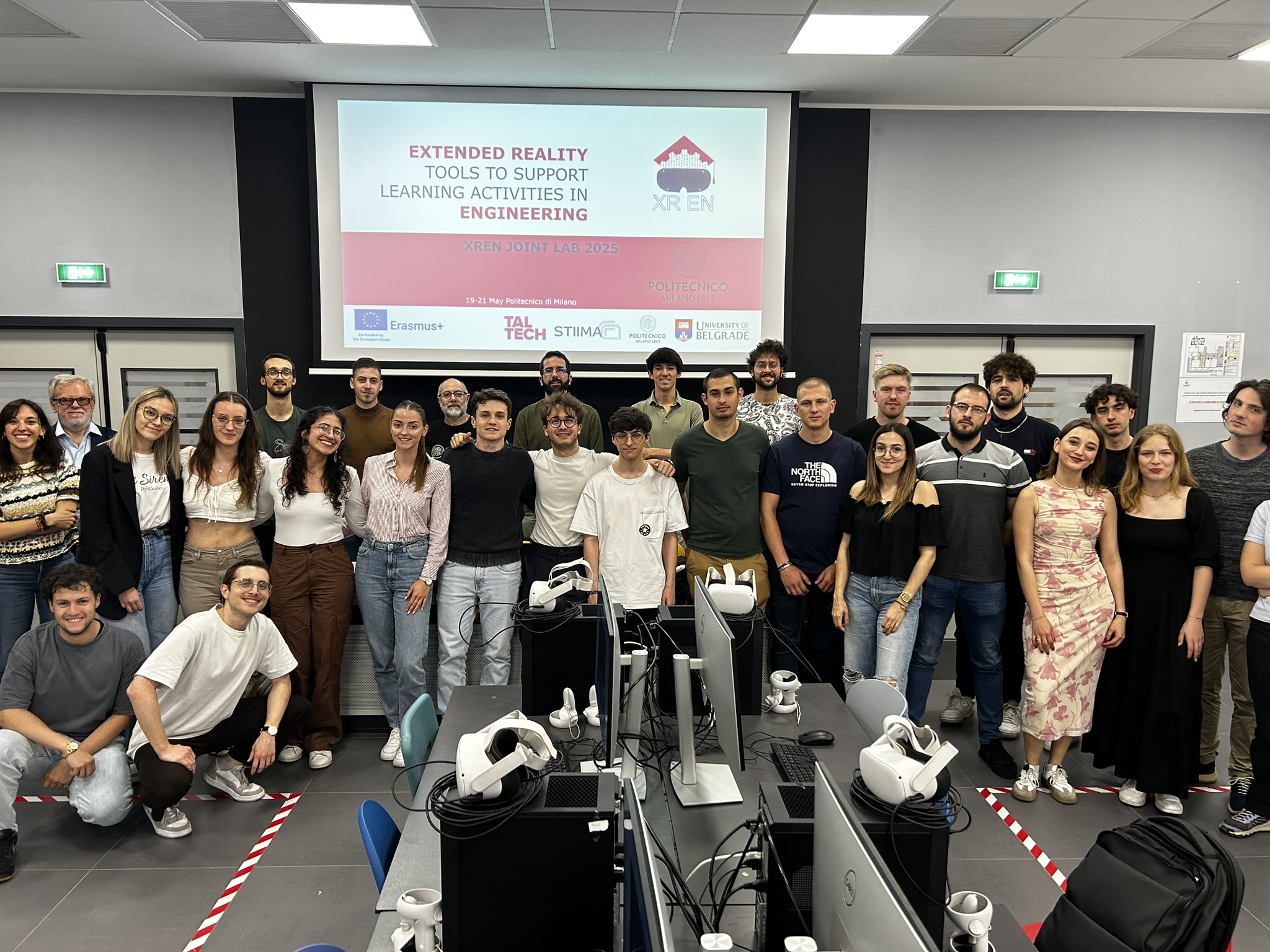
The second XR Learning Workshop of the XREN project was held at the Politecnico di Milano in Milan, Italy, from 19 to 21 May 2025. The event, titled Extended Reality Tools to Support Learning Activities in Engineering, brought together students and project partners to explore how extended reality (XR) can support engineering education.
The workshop contributed to the objectives of the XREN Erasmus+ project by connecting the project’s XR learning workflows and applications with a hands-on educational setting. It gave participants the opportunity to compare physical and virtual learning experiences, apply good practices for designing XR-based learning activities, and collaboratively improve an existing learning application. In this way, the event linked technical development with the project’s broader aim of making engineering learning more interactive, practice-oriented, and accessible through XR.
Activities
The workshop activities were organised around three complementary strands:
-
Technical workshops
- Introduction to the software and tools used for XR development.
- Practical introduction to Unity for virtual-reality development.
- Design of user interfaces and interaction in VR.
- Discussion of XR design methodologies and good practices.
- Definition of learning objectives and structuring of XR-based learning workflows.
- Team work to apply the learning-workflow concepts and improve the XR learning experience.
-
Laboratory activity: VR versus hands-on product analysis
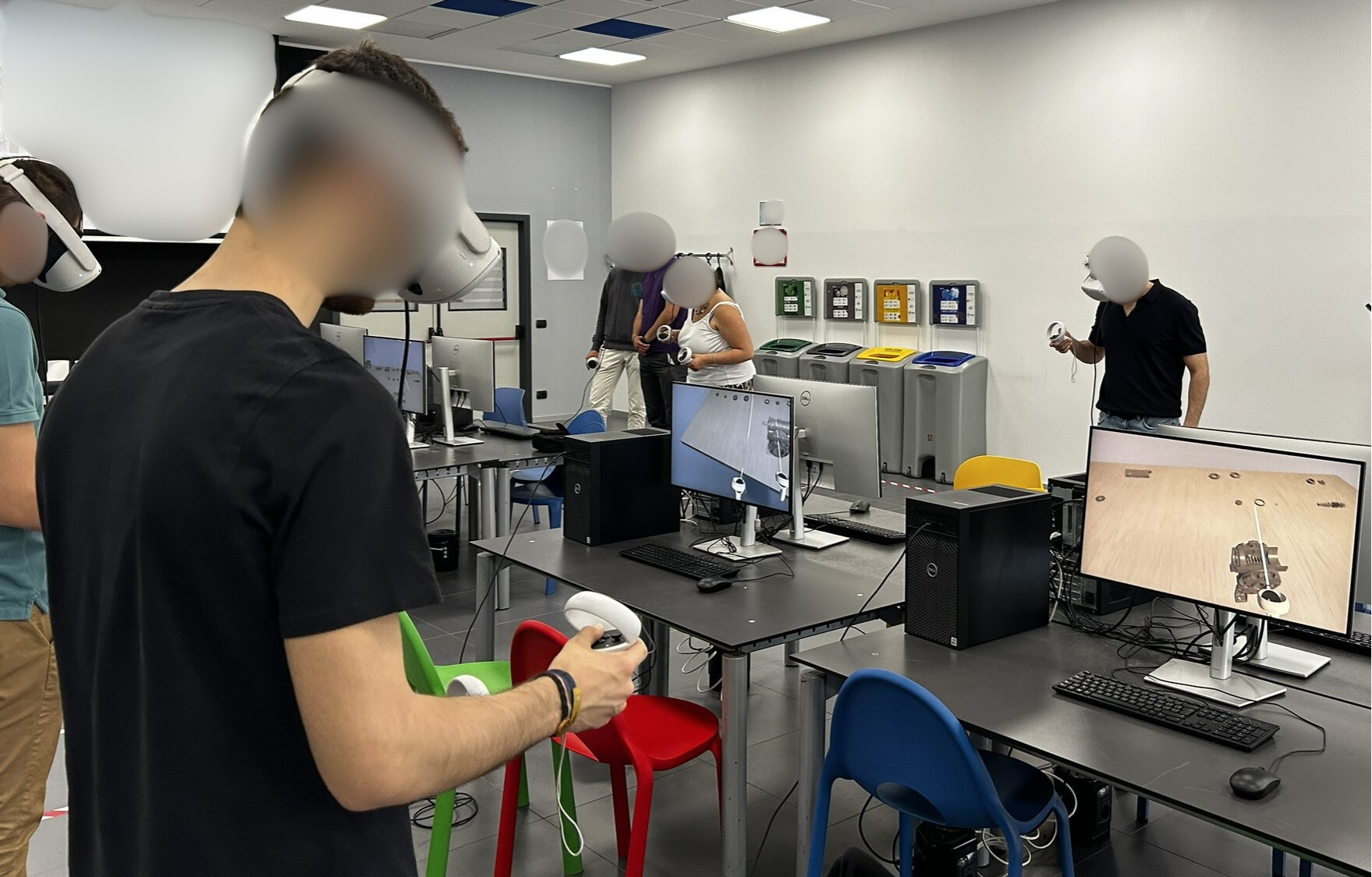
Students worked with a worm gearbox in two parallel modes: disassembly of a physical prototype and disassembly of the same product in a VR application.
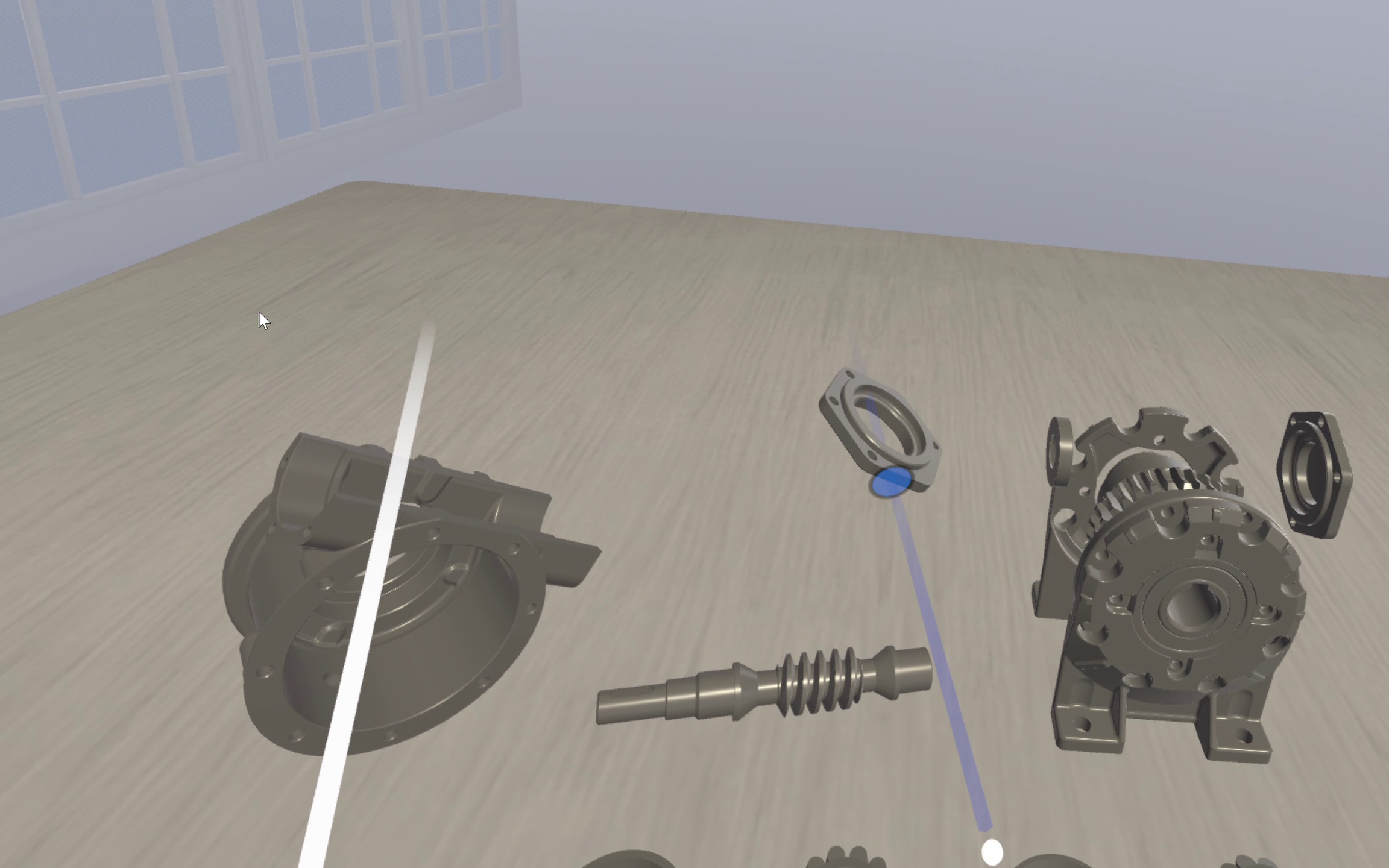
The activity included a pre-assessment, two rounds in which groups exchanged experiences, learning and post-activity questionnaires, and a final focus-group discussion. Its objective was to examine the effectiveness of XR in supporting the learning of an engineering topic in comparison with direct practical experience.
-
Final student challenge
After testing the application, the students formed teams and identified opportunities to improve its XR interaction and learning experience. They then developed and deployed their proposed improvements, prepared a final presentation, and discussed their work during a shared wrap-up session with questions and answers.
Assessment
The laboratory assessment measured the number of questions answered correctly about the gearbox and its operation. In the reported results, the physical experience group achieved 69 correct answers in total, while the VR experience group achieved 60. The physical experience therefore produced the higher raw total in this activity. The comparison should be interpreted descriptively, since the reported groups were not the same size (13 students in the physical condition and 10 in the VR condition).
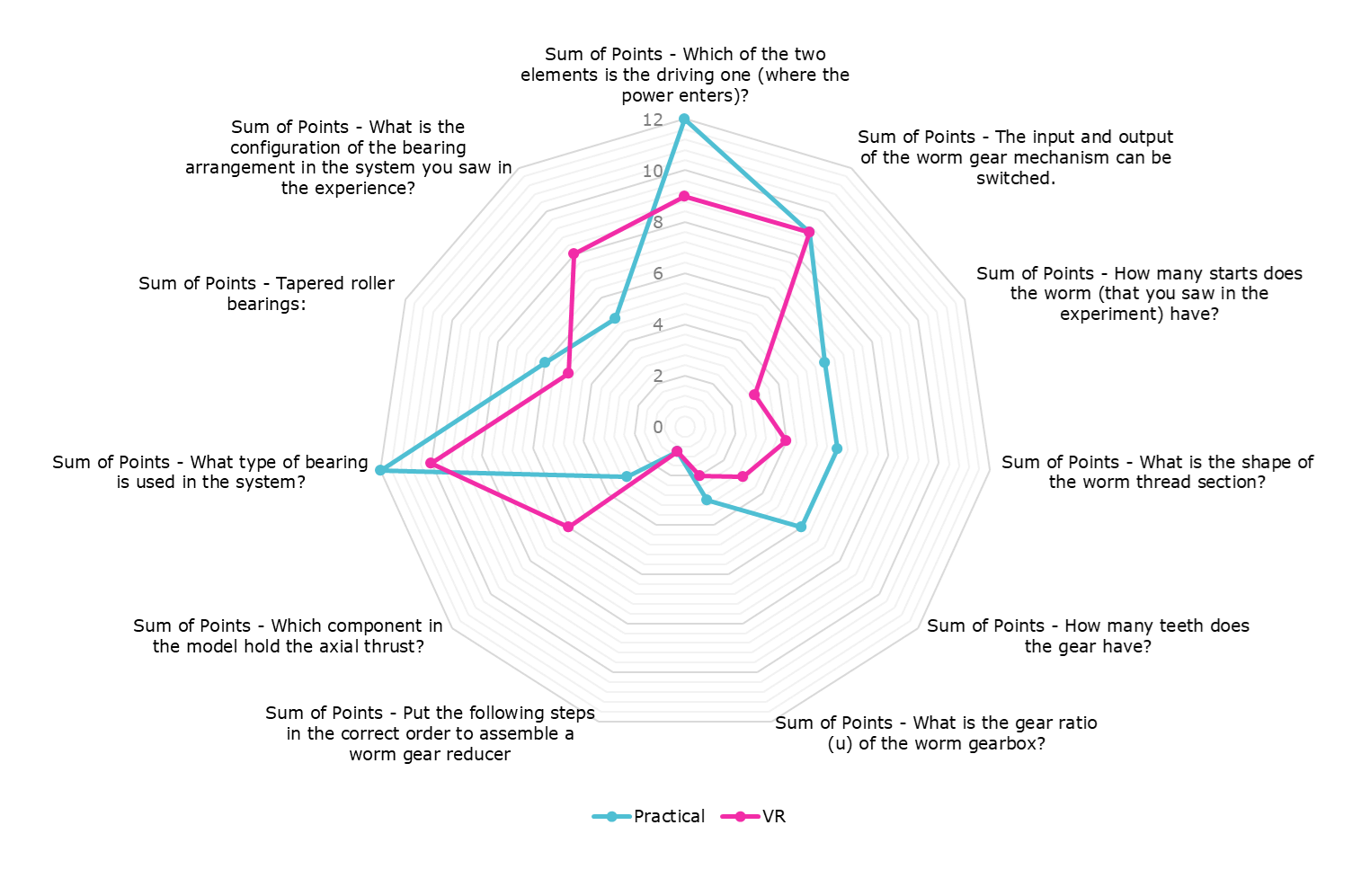
The item-level results also showed a mixed pattern rather than a uniform advantage for one mode. The physical condition performed better on several questions concerning the driving element, the number of gear teeth, the worm thread, the number of worm starts, and the gear ratio. The VR condition scored higher on identifying the bearing arrangement and the component carrying the axial thrust, while both conditions obtained the same result for whether the worm mechanism’s input and output could be switched and for ordering the assembly steps [2].
Workshop in Lecco (02-05 July 2025)
Activities
Assessment
[3].
Workshop in Belgrade (25-27 May 2026)
Activities
Assessment
References
[1] Mondellini M, Arlati S, Urgo M, Pizzagalli S, Mahmood K, Terkaj W (2026) Comparing Traditional and eXtended Reality-Based Learning: Effects on Performance, Emotions, and Cognitive Aspects. In: De Paolis LT, Arpaia P, Sacco M (eds) Extended Reality. XR Salento 2025. Lecture Notes in Computer Science, 15742:324–336. Springer, Cham. https://doi.org/10.1007/978-3-031-97778-7_24
[2] Mondellini M, Arlati S, Stefanone A, Lucania E, Colombo G, Urgo M, Terkaj W (2027) Teaching product assembly with VR: advantages, shortcomings, and student perceptions. In: De Paolis, L.T., Arpaia, P., Sacco, M. (eds) Extended Reality. XR Salento 2026. Lecture Notes in Computer Science, 16837:323-336. Springer, Cham. https://doi.org/10.1007/978-3-032-33500-5_22
[3] Terkaj W, Arlati S, Mondellini M, Dindic A, Sacco M (2027) XR Experiential Learning in Higher Education: A Framework and Full-Immersion Workshop Experience. To appear in Springer Proceedings in Business and Economics.